If you’ve landed on this page, you’ve probably already fallen in love with photos of the Valley of Flowers – that impossible carpet of Himalayan wildflowers stretched below snow peaks in the Bhyundar Valley. What most trekkers don’t plan for is the getting there part. As a Dehradun-based taxi operator running this exact route through every monsoon season, we’ve put together the practical guide we wish more trekkers had before they landed: the road from Jolly Grant Airport to Govindghat, the trek itself, altitude and difficulty, 2026 permit fees and rules, the best months to go, and a realistic day-by-day plan.
 Get Quote
Why Fly into Dehradun for the Valley of Flowers Trek
Jolly Grant Airport (DED) is the only airport that puts you within a single day’s drive of Govindghat, the gateway town for the Valley of Flowers trek. Compared to routing through Delhi and driving the extra distance, flying into Dehradun cuts hours off your journey – which matters when you’ve only got a week off work and want to spend it in the mountains, not in a car.
The Road Route: Jolly Grant Airport to Govindghat
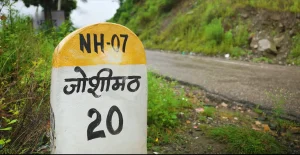
- Distance: Approximately 277–280 km by road
- Travel time: Roughly 8–10 hours, depending on traffic, weather, and monsoon-season road conditions
- Route: Dehradun → Rishikesh → Devprayag → Srinagar → Rudraprayag → Karnaprayag → Chamoli → Joshimath → Govindghat
This is a long mountain drive through landslide-prone monsoon terrain – the exact season the Valley of Flowers is in bloom. Our drivers who cover this stretch regularly almost always recommend breaking it into two days rather than pushing through in one go:
- Day 1: Jolly Grant Airport → Rudraprayag or Joshimath (overnight halt)
- Day 2: Onward to Govindghat, then start the trek to Ghangaria
A pre-booked taxi removes the single biggest source of stress on this route: finding a reliable hill driver at short notice, especially in July–August when vehicles get booked out early. This road overlaps with the Badrinath route for most of the way- see our Dehradun Airport to Badrinath taxi guide if you’re planning to combine both trips.
The Trek Route: Govindghat to the Valley of Flowers
Once you reach Govindghat, the trek unfolds like this:
Day 1: Govindghat to Ghangaria (13 km) A shared taxi covers the first 3–4 km to Pulna (₹60 per person). From there, you trek through forest and past waterfalls along the Lakshman Ganga river — takes about 6–8 hours on foot. Don’t want to walk? Ponies, porters, and a helicopter (book via IRCTC) are all available. Stay overnight in Ghangaria to acclimatize.
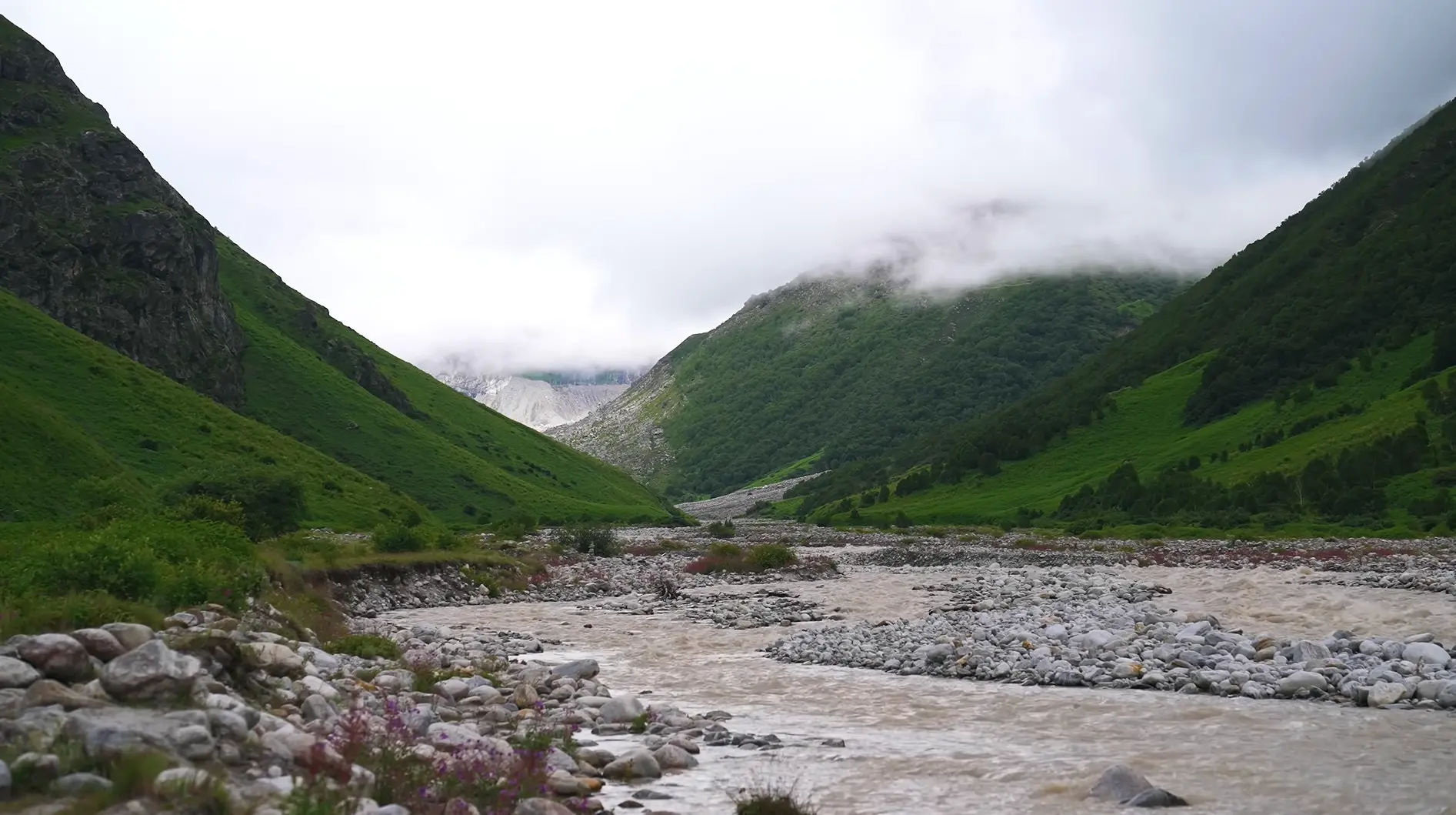
Day 2: Valley of Flowers (8–10 km round trip) It’s a 4–5 km walk one-way from Ghangaria to the valley, along the Pushpawati river. Gates open at 7 AM. There are no shops inside, so carry your own food and water — and no camping or overnight stays allowed.
Entry fees:
- Adults (18–60): ₹200 (Indians), ₹800 (foreigners)
- Students (18+, with ID): ₹100
- Children (13–18): ₹50
- Children (under 12): Free
- Seniors (60+): ₹100
Day 3: Hemkund Sahib (12 km round trip) The toughest day — a steep 6 km climb to the gurudwara at 4,632 m, next to the sacred Hemkund Lake. The Lokpal Lakshman Mandir is just above it. Start early, since the gurudwara closes by 2 PM. Many pilgrims take a dip in the lake and have langar before heading back down to Ghangaria.
Day 4: Ghangaria to Govindghat (13 km descent) A full walk back down to Pulna, then a shared taxi (₹60 per person) to Govindghat.
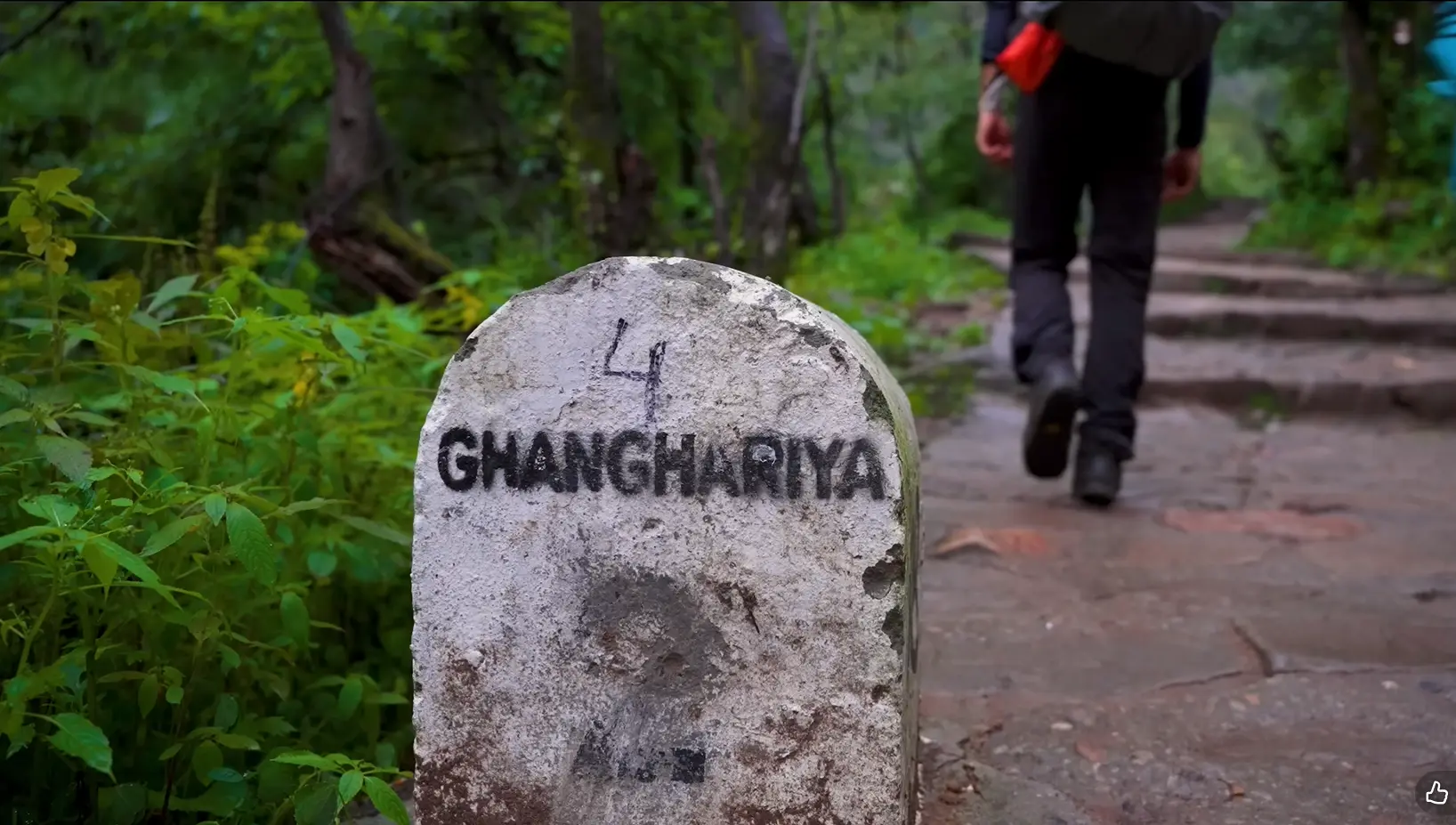
Important rule: No overnight stay is permitted inside the Valley of Flowers itself. Every visit is a same-day in-and-out from Ghangaria, with the gate open roughly 7 AM to 5 PM and last entry around 2 PM.
Trek Difficulty at a Glance
| Stat | Detail |
|---|---|
| Total round-trip distance | Approx. 38 km (Govindghat–Ghangaria–Valley of Flowers–Ghangaria–Govindghat) |
| Highest altitude reached | 3,658 m (Valley of Flowers); 4,329 m if extending to Hemkund Sahib |
| Typical duration | 4–6 days including travel to and from Govindghat |
| Trail type | Well-defined, moderate grade; steeper and more demanding on the Hemkund Sahib extension |
The trek is graded moderate rather than difficult – the trail is clear and doesn’t require technical climbing – but the altitude and daily walking distances mean reasonable fitness matters more than people expect.
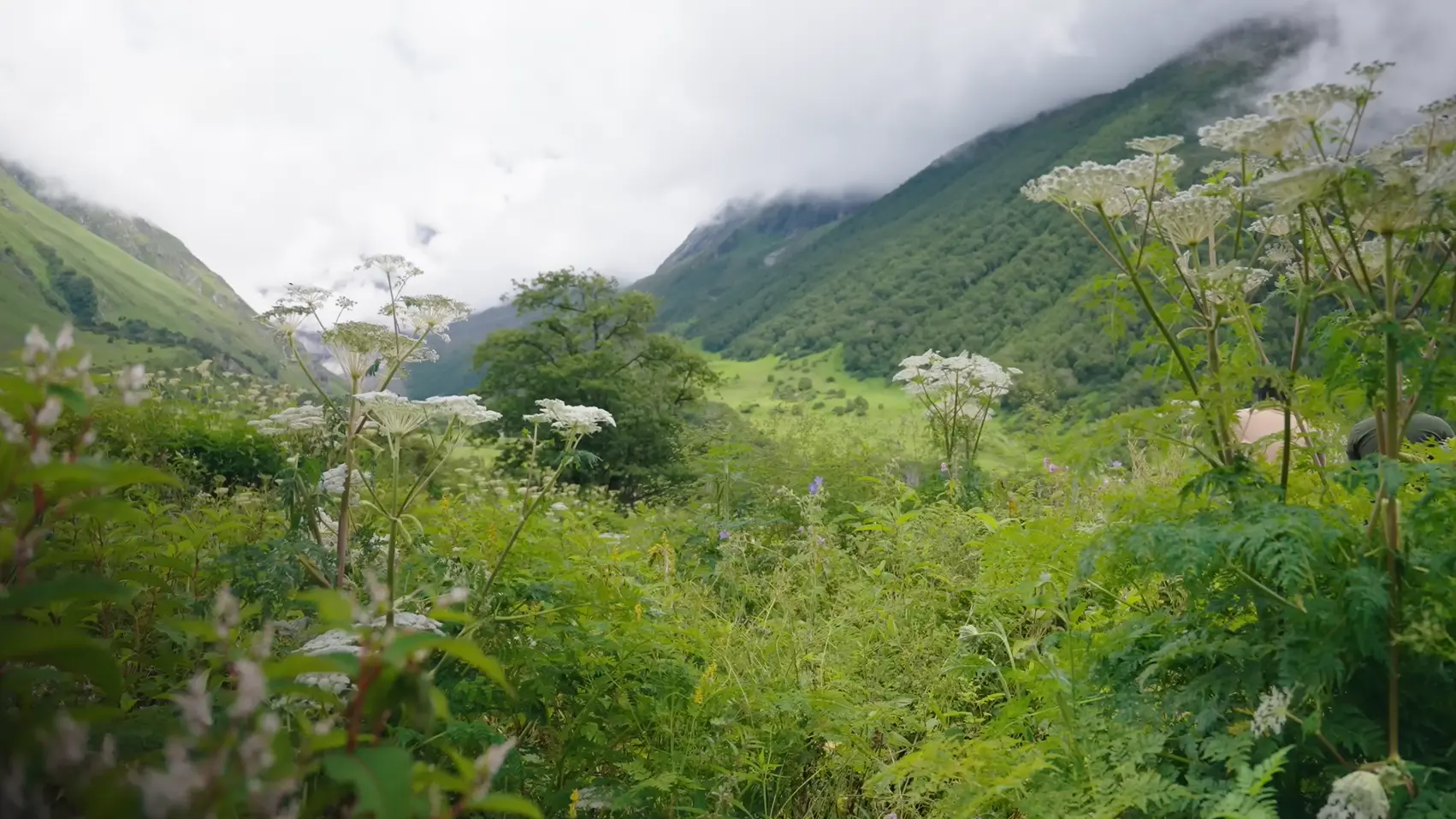
Best Time to Visit in 2026
The park is expected to be open from June 1 to October 31, 2026, but the experience shifts noticeably through the season:
| Period | What to Expect | Best Suited For |
|---|---|---|
| Early June | Park just opening, lingering snow patches, minimal bloom | Those prioritizing snow scenery over flowers |
| Late June | Early bloomers like primulas and anemones begin appearing | Early-season, low-crowd visits |
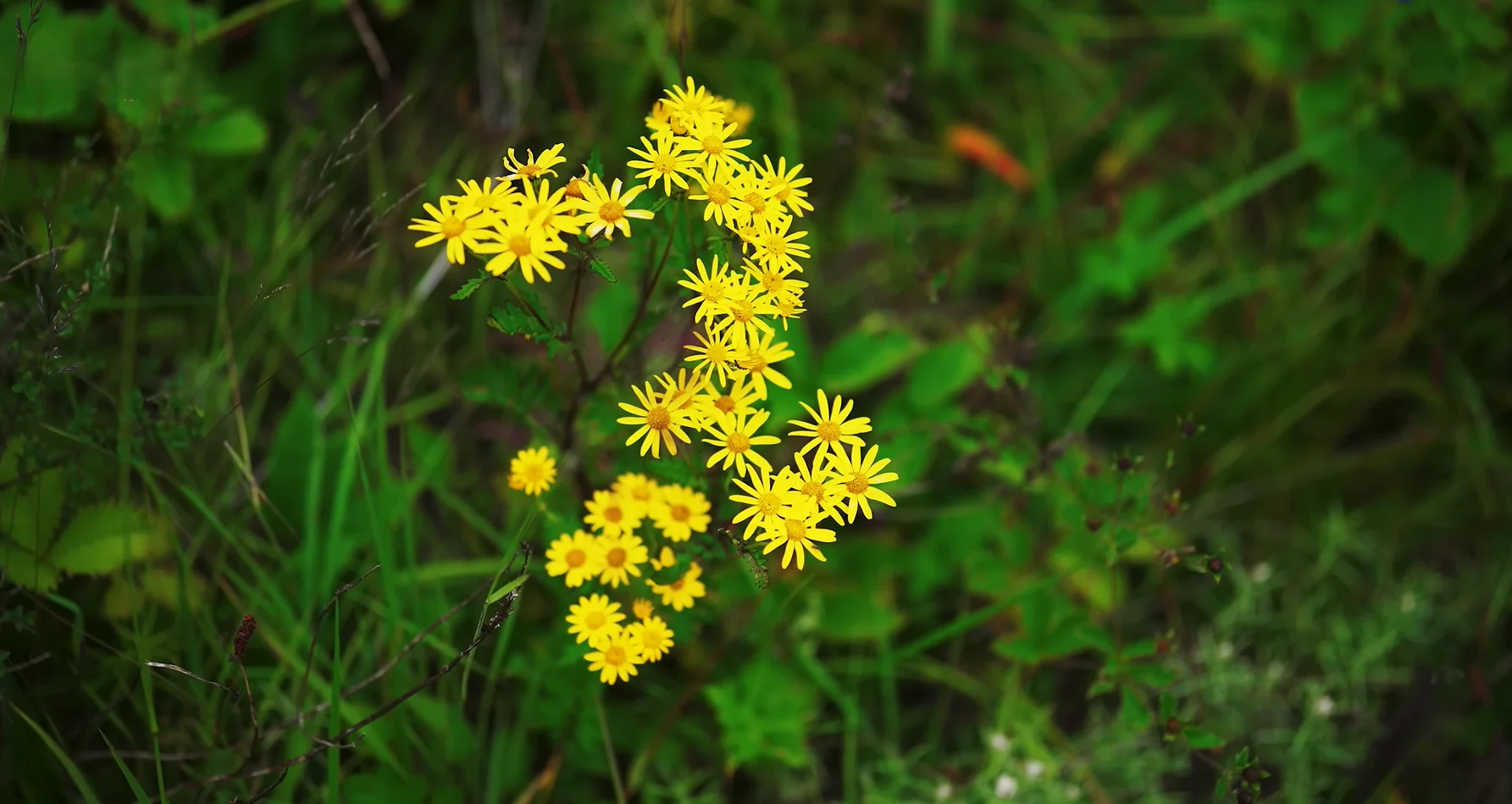
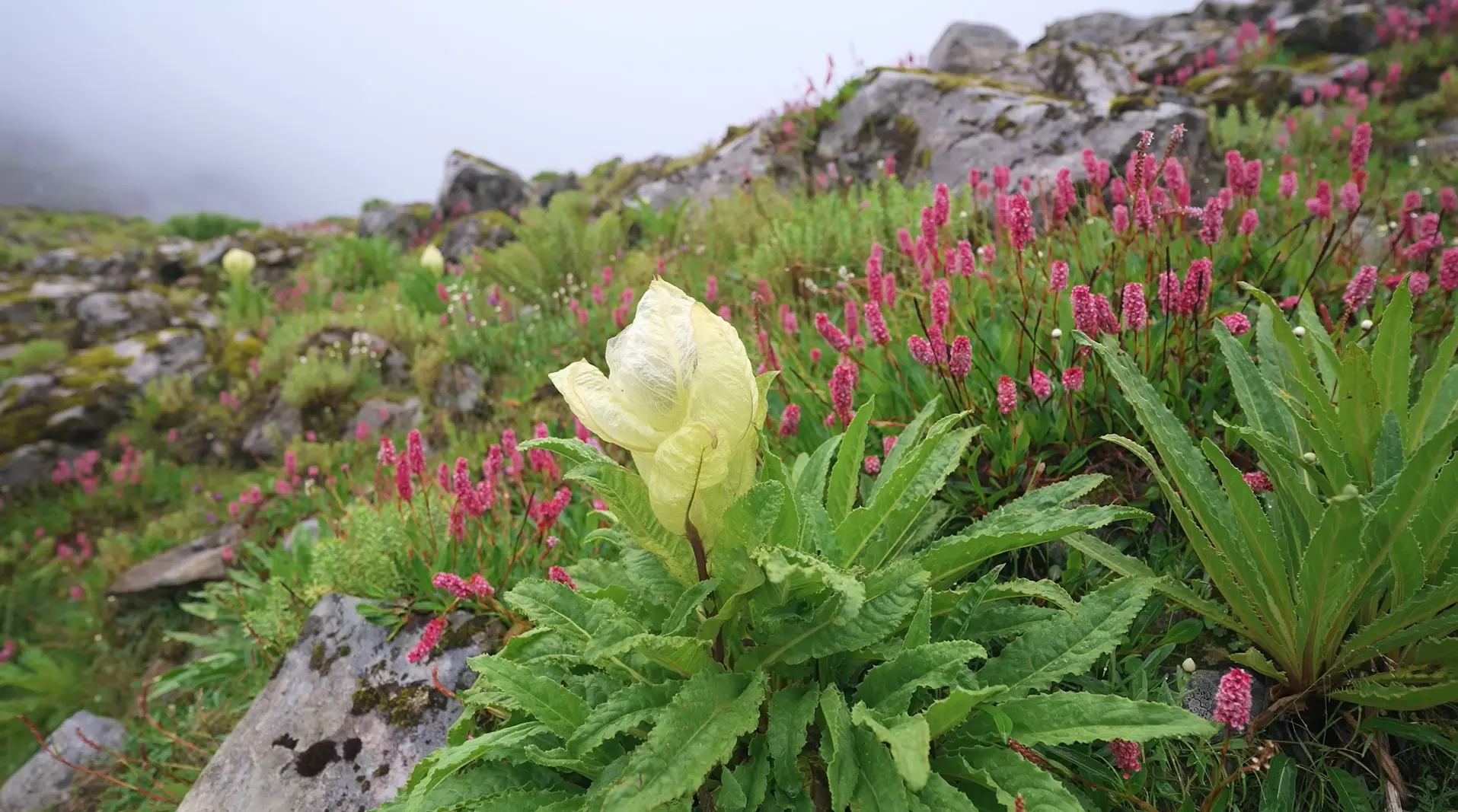
| Mid-July to mid-August | Peak bloom – 500+ species carpet the valley; also peak monsoon | Photographers and flower enthusiasts willing to handle rain |
| Late August to September | Bloom tapering off, trails drying out, clearer skies | Trekkers who prefer drier conditions over maximum bloom |
| October | Valley turning autumnal gold, park nearing closure | Clear-view seekers, quieter trails, minimal flowers |
If photographing the bloom at its fullest is the priority, plan for late July into the first half of August – and book your taxi and stay well in advance, since this is also when demand for vehicles out of Jolly Grant Airport peaks.
Is This Trek Right for You?
- Beginners: Yes, with preparation. The trail itself is well-defined and doesn’t demand technical skill, but the daily distances and altitude mean some prior fitness (regular walking or light cardio) makes the experience far more enjoyable.
- Families with children: Generally suitable for children above 10 who can walk 8-10 km comfortably. The Ghangaria-to-valley stretch is gentle, but the longer Govindghat-to-Ghangaria leg and any Hemkund Sahib extension are more demanding and worth skipping with younger kids.
- Senior travelers: Doable for seniors in reasonable health, especially by hiring a mule or porter for the Govindghat-to-Ghangaria stretch to conserve energy for the valley walk itself. We’d suggest a doctor’s check-in beforehand given the altitude, and treating Hemkund Sahib as optional rather than mandatory.
Permits, Rules, and What to Pack
Entry to the Valley of Flowers National Park requires a Forest Department permit – non-negotiable for every visitor, Indian or foreign.
- Indian nationals: Around ₹150–200 for a 3-day pass (rates have varied slightly by season, so confirm current pricing before you travel)
- Foreign nationals: Around ₹650–800
- Children under 12: Free
- Daily visitor cap: 300 people per day, enforced since 2017 to protect the ecosystem
Permits can typically be booked online through the Uttarakhand Forest Department portal or purchased at the counter in Ghangaria, roughly 1.5 km before the valley checkpoint. During peak season, online booking is strongly recommended since walk-in quotas can run out by mid-morning.
Park Rules to Know Before You Go
Because this is a protected UNESCO World Heritage Site, a few rules are strictly enforced and worth knowing in advance:
- No littering – carry your waste back out with you
- No plucking or picking flowers or plants, however tempting
- Drones are prohibited inside the park
- Entry is daytime-only (7 AM to 5 PM), with no overnight stay permitted
- Camping, campfires, and loud music are not allowed inside the valley
Practical Tips From the Road
A few things that don’t always make it into the standard guides, but matter in practice:
- Mobile connectivity drops off past Govindghat – don’t count on data or calls working reliably in Ghangaria or the valley itself. Let people know in advance that you’ll be offline.
- Carry enough cash. Digital payments are unreliable in the upper reaches, and not every guesthouse, dhaba, or permit counter accepts cards or UPI.
- Start early. Afternoon clouds and rain build up fast during monsoon season, and starting your trek by 6:30–7 AM gives you the best light and the least chance of getting caught out.
Pack for wet, changeable mountain weather: waterproof trekking shoes with good grip, a poncho or rain jacket (not just an umbrella), layered clothing, a basic first-aid kit, and your original government ID (Aadhaar, voter ID, or passport for foreign nationals), which is checked at the permit counter.
A Realistic 6-Day Itinerary from Jolly Grant Airport
- Day 1: Land at Jolly Grant Airport, taxi to Rudraprayag or Joshimath, overnight halt
- Day 2: Drive to Govindghat, trek to Ghangaria, overnight stay
- Day 3: Trek to the Valley of Flowers, explore the meadows, return to Ghangaria
- Day 4: Trek to Hemkund Sahib and back to Ghangaria
- Day 5: Trek down to Govindghat, drive back toward Joshimath or Rudraprayag
- Day 6: Drive back to Jolly Grant Airport for departure
We’d suggest building in one buffer day. Monsoon landslides on this route are common, and a spare day means a road delay doesn’t turn into a missed flight home.
Frequently Asked Questions
How far is Valley of Flowers from Jolly Grant Airport, Dehradun?
Govindghat, the base town for the trek, is approximately 277–280 km from Jolly Grant Airport by road, taking around 8–10 hours to drive. From Govindghat, it’s a further trek of about 17 km through Pulna and Ghangaria to reach the Valley of Flowers itself.
When does the Valley of Flowers Trek open in 2026?
The park is expected to open around June 1, 2026, and remain open until October 31, 2026, though exact dates depend on the Uttarakhand Forest Department’s final notification each year, which is usually confirmed closer to the season. It’s worth checking the official portal a few weeks before you travel to confirm the confirmed opening date.
What is the altitude of the Valley of Flowers?
The Valley of Flowers sits at approximately 3,658 meters (about 12,000 feet). If you extend the trip to Hemkund Sahib, that climbs to around 4,329 meters, which is a noticeably harder ask on the body.
Can I reach Valley of Flowers in one day from Dehradun airport?
Technically yes, but it’s not something we’d recommend. The 8–10 hour drive plus travel fatigue makes a same-day push risky, especially in monsoon conditions with landslide-prone stretches. Most of our travellers split the journey with an overnight halt at Rudraprayag or Joshimath before continuing to Govindghat.
Do I need to book a taxi in advance for the Valley of Flowers trek?
Yes, particularly for July–August travel. Vehicles and experienced hill drivers get booked out quickly during peak bloom season, and arranging a cab on arrival at the airport is far less reliable than booking ahead.
Is a permit required to enter Valley of Flowers?
Yes – every visitor, Indian or foreign, needs a Forest Department permit. It can usually be booked online through the Uttarakhand Forest Department portal or purchased at the counter in Ghangaria. Fees and rules have shifted between seasons, so confirm current pricing before you travel.
Are guides compulsory for the trek?
No, independent trekking is permitted – you can get your own permit at Ghangaria and go at your own pace. That said, a local guide adds real value for identifying flower species, reading trail conditions in the rain, and managing altitude-related issues, especially for first-time Himalayan trekkers.
Is it safe to trek during monsoon season?
Generally yes, since the monsoon is exactly what triggers the bloom, but it does mean wet, sometimes slippery trails and a higher chance of road delays getting to Govindghat. Good rain gear, a cautious pace, and building in a buffer day for road conditions go a long way toward making it a safe, comfortable trip.
How many days should I plan for the trip from Dehradun?
A realistic itinerary from Jolly Grant Airport and back is 5–6 days: roughly two days of travel each way (with an overnight halt), one day for the Valley of Flowers, and an optional extra day for Hemkund Sahib.
How far is Rishikesh from Dehradun on the way to Valley of Flowers?
Rishikesh is about 20–25 km from Jolly Grant Airport, roughly 35–45 minutes by road, and it’s the first major waypoint on the drive toward Govindghat. Many trekkers also base themselves in Rishikesh the night before an early start toward the hills.
Ready to Plan Your Trip?
The Valley of Flowers is one of those trips where the journey genuinely shapes the experience – a smooth, well-timed drive means more energy for the trek itself. As a Dehradun-based operator, we run the Jolly Grant Airport to Govindghat route through every monsoon season, so we know where the halts make sense, which stretches need extra caution, and how to time your pickup around your flight.
If you’re flying into Dehradun for the Valley of Flowers or Hemkund Sahib this season, get in touch to lock in your Dehradun Airport taxi in advance – especially if your travel dates fall in the July–August peak bloom window.